Quick answer
In men, ashwagandha has been studied mainly around stress markers, perceived stress and sleep quality, with a smaller and less consistent body of work on exercise performance and hormone measures. KSM-66 is the extract used in much of that research, typically at 300–600mg a day for eight to twelve weeks. It is a food supplement, not a treatment for any condition.
Stress and cortisol
This is the best-supported area. Multiple placebo-controlled trials in stressed but otherwise healthy adults have measured perceived stress scores and serum cortisol after 8–12 weeks of a standardised root extract, and several report reductions on both against placebo.
The trials are still modest in size, and 'lower perceived stress score' is not the same as treating an anxiety disorder — which no food supplement may lawfully claim to do in the UK.
Sleep
Sleep quality is the second most studied outcome, often measured alongside stress. Studies have reported improvements in sleep onset and sleep quality questionnaires in adults with poor sleep. This is also the reason some men take ashwagandha in the evening rather than the morning.
Strength, recovery and performance
Smaller trials in resistance-trained men have examined muscle strength, size and recovery markers over 8–12 weeks alongside a training programme. Some report advantages over placebo. These are small studies and the training itself is doing the heavy lifting — the supplement question is only whether it adds anything at the margin.
Hormonal markers and male reproductive health
A number of small studies in men have measured testosterone and related markers, some in men with fertility complaints and some in healthy men undertaking training. Results are mixed and the samples are small.
The fair summary is that ashwagandha is studied in this area but is not an established treatment for anything hormonal, and should not be sold as one.
Dosage and extract quality
Trials typically use 300–600mg a day of a root extract standardised for withanolides, taken with food. Root-only extracts are what most of the research used; cheaper products sometimes include leaf material, which is not the same thing.
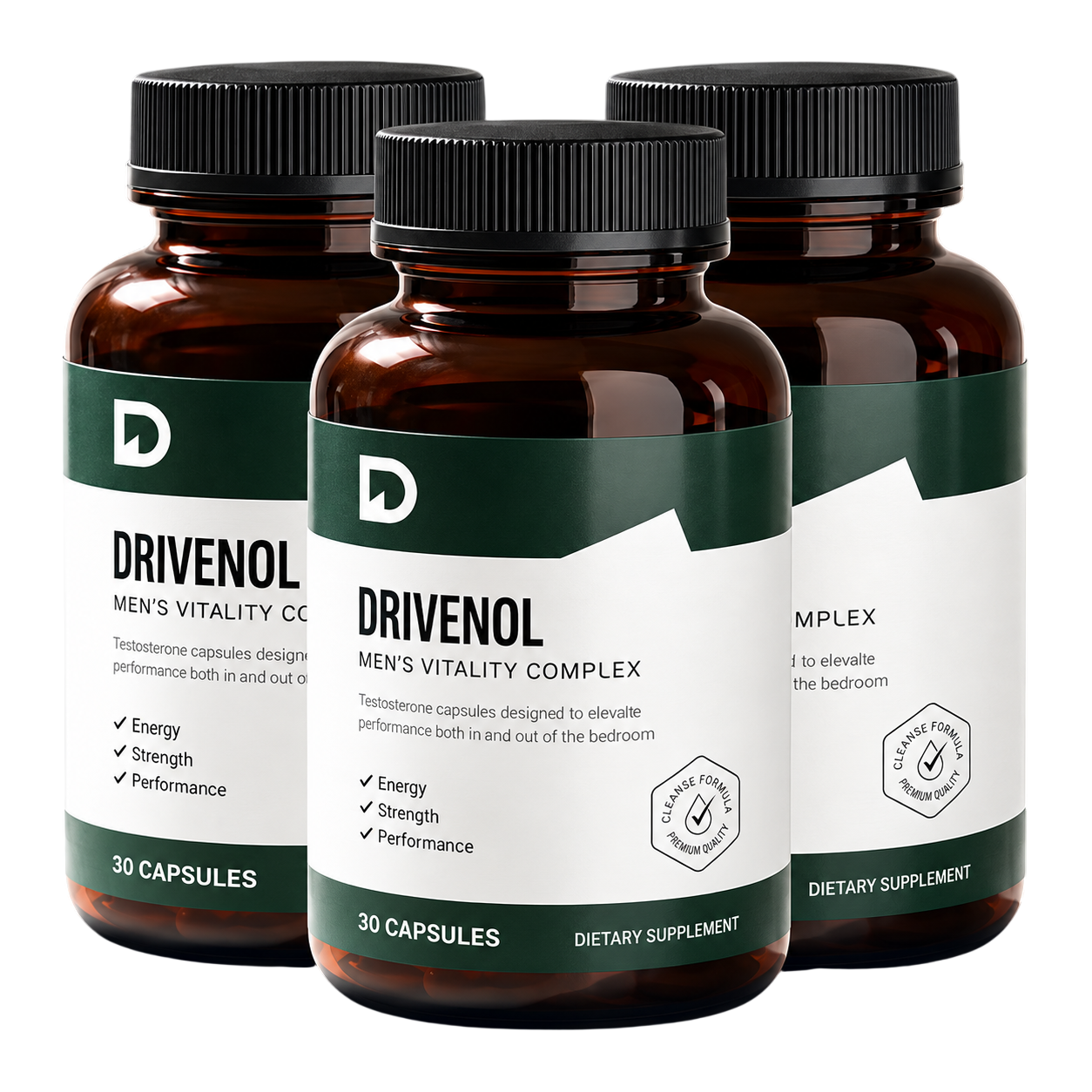
KSM-66 is the branded full-spectrum root extract behind a large share of the published trials, which is why Drivenol uses it rather than a generic powder.
What the research covers, area by area
| Area | Evidence | What that means for you |
|---|---|---|
| Perceived stress | The strongest and most repeated area | The most reasonable expectation |
| Sleep quality | Several supportive trials | Often reported alongside stress measures |
| Strength and recovery | Some small trials, mixed | Training and protein matter more |
| Hormone measures | Mixed, small samples | Not a treatment for low testosterone |
| Cognition | Early and limited | Too thin to rely on |
How long men in studies took it
Most trials run eight to twelve weeks of continuous daily dosing. Very few run longer, so honest long-term data is thin. If you are trying it, plan on a couple of months before deciding rather than a couple of days.
Who tends to get least from it
- Men who already sleep seven to eight hours and report low stress.
- Anyone using it instead of dealing with an obvious cause — shift work, heavy drinking, chronic under-eating.
- Anyone taking a product that hides the ashwagandha dose inside a blend total.
- Anyone judging it after a week.
How it fits with the basics
Supplements sit on top of foundations, not instead of them. Sleep length and regularity, resistance training, alcohol intake and body composition all have far more evidence behind them than any capsule, and they are free.
If those are in reasonable shape and stress is your main complaint, ashwagandha is one of the more sensibly evidenced things you could add.
Common questions
Sources
Where this page refers to research, guidance or consumer rules, these are the references used. We link to the source so you can read it yourself.
This page is general information about food supplements and is not medical advice. Drivenol is a food supplement and is not intended to diagnose, treat, cure or prevent any disease. If you have a health concern, or you take prescription medication, speak to your GP or pharmacist.